Friday, 28 February 2014
more cool kinetic sculptures
I am fascinated by the ability to fool a human viewer into assuming a motion is natural, so much so that he or she feels drawn to interact with a familiar, almost instinctual response. As these drops fall, even though they are larger then life, this caricature is linked by association in our minds and a connection between the two are made, much like those made between commands in Pd. The assumptions and reactions are sure to shortly follow....
"Kinetic Rain" Changi Airport Singapore from ART+COM on Vimeo.

Box
by: Tarik Abdel-Gawad & Bradley G. Munkowitz
Described as a "human choreography encompass " the project, Box, works with the "synthesis of real and digital space through projection-mapping on moving surfaces" so as to work in conjunction with the performer to illuminate both an artistic statement as well as technical experimentation, which is pretty inspirational. It checks so many boxes:
- Large Scale Robotics
- Software Engineering
- Creativity in general
- Projection Mapping
creating a ... Magical experience (the title of my blog).
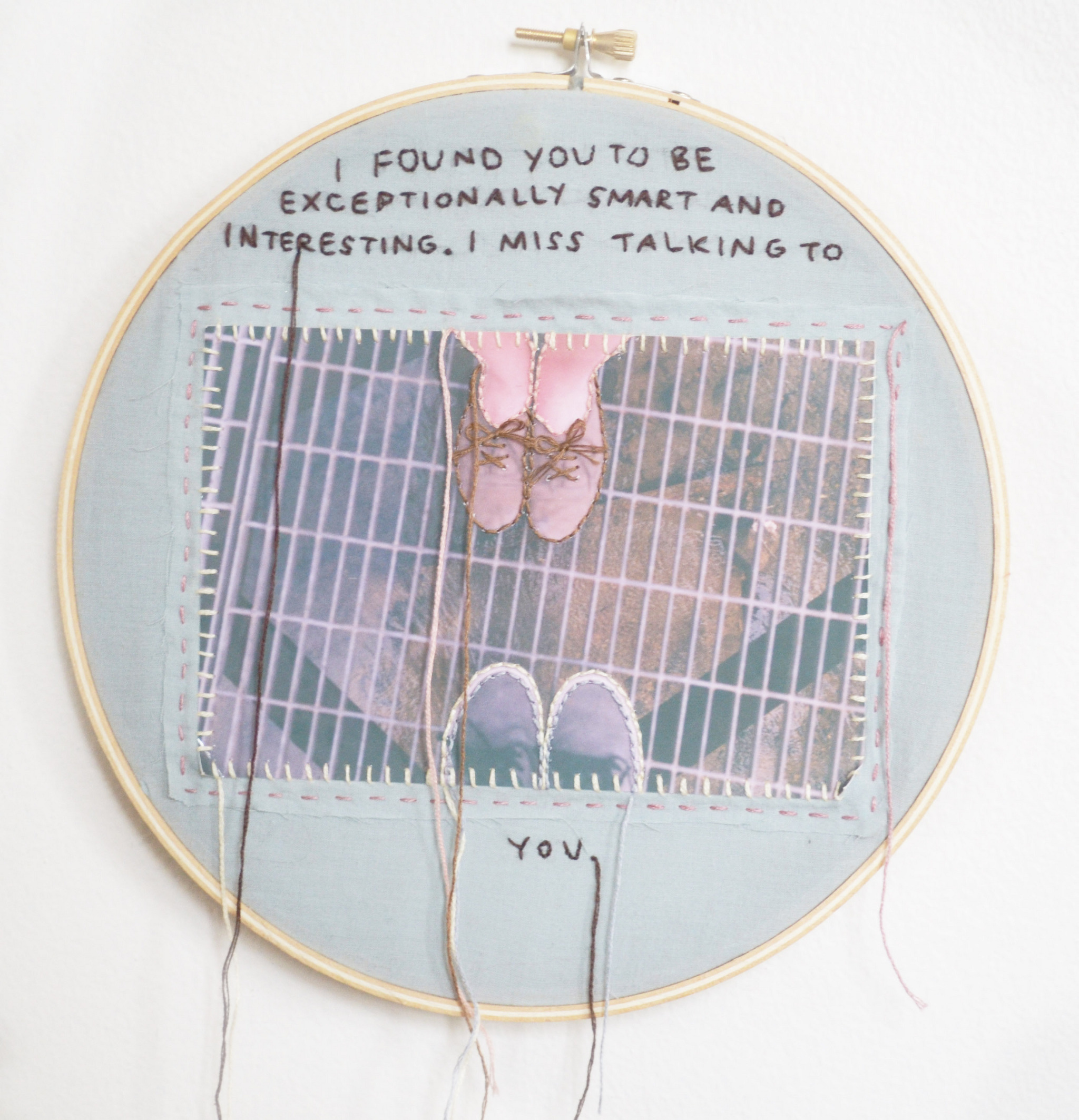
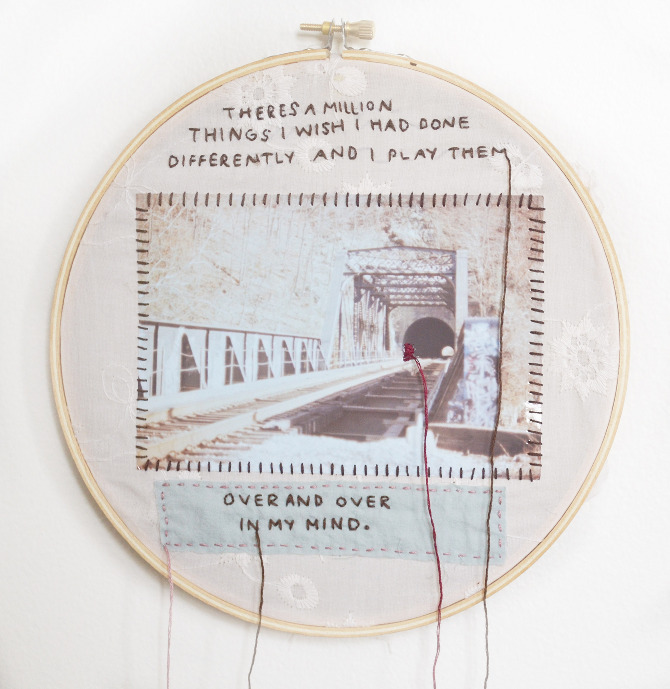
Lindsay Bottos
Click Here and Here


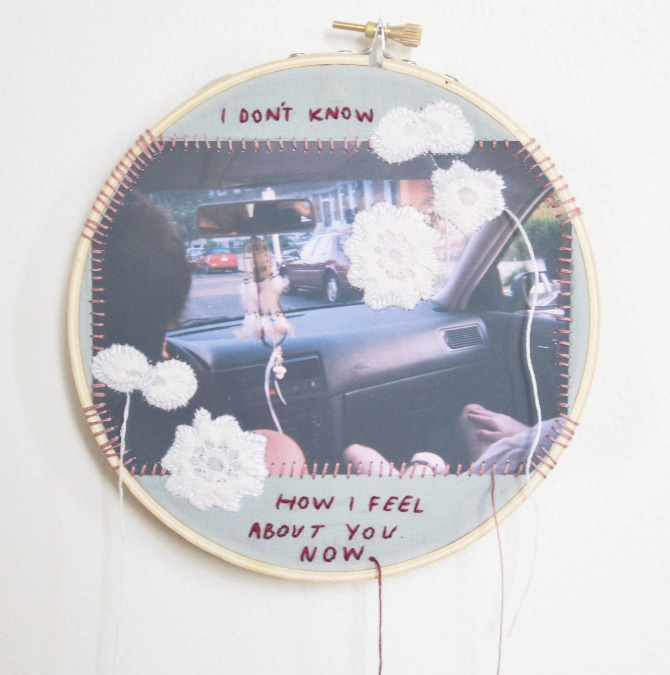
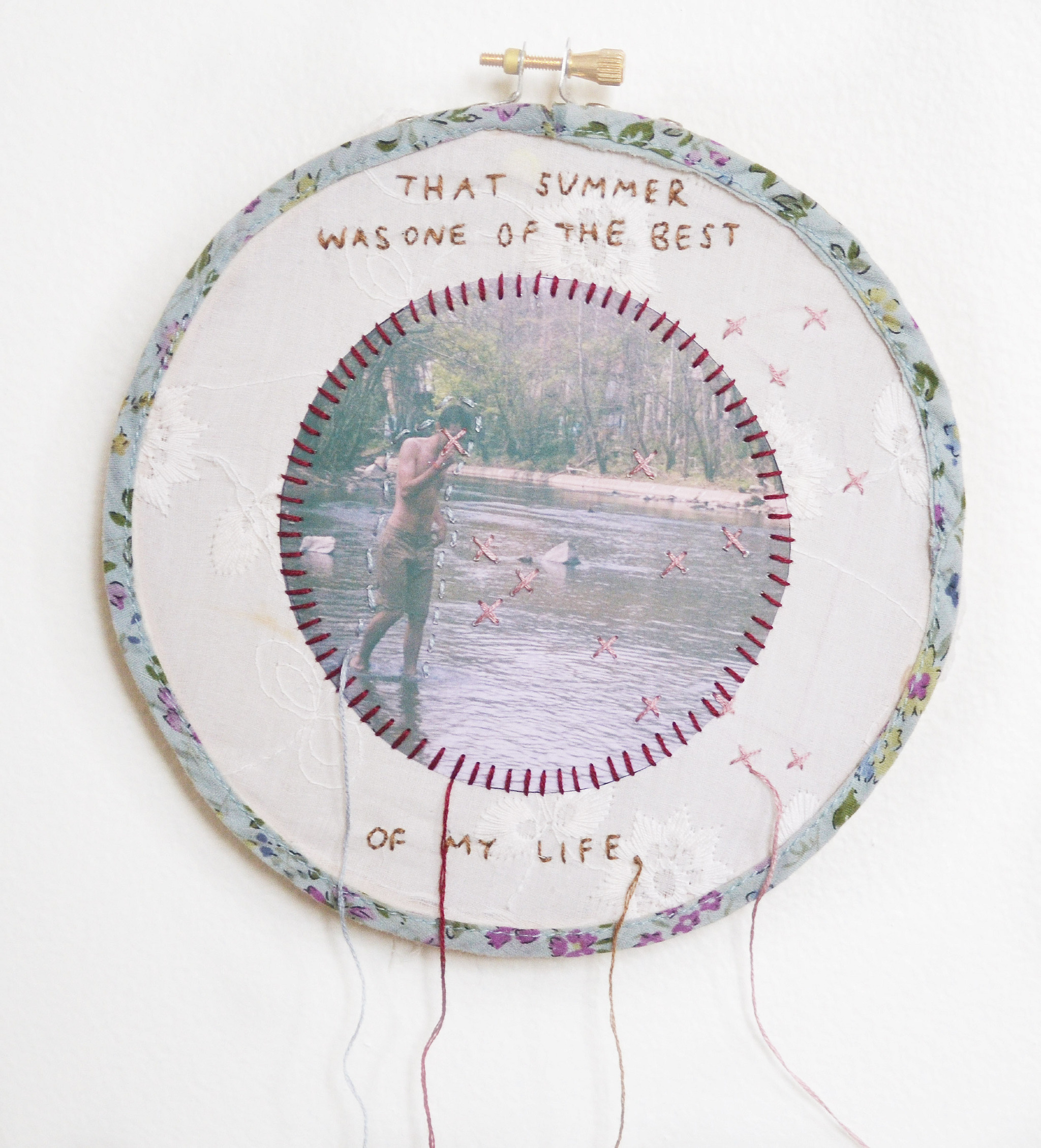
While I do acknowledge that there is a naive feel to Bottos' work at times, there's something nostalgic in a romantic way about embroidery, like polaroid pictures (which probably shows my age) that appeals to me. Maybe I just take a liking because my mother and grandmother use to give me embroideries that they created as presents, so I associate them with care. They are a lot of work though, and do hold sentimental value due to the level of meticulous attention required to be executed in order to successfully complete one. The personalization and added sentiment of an already intimate moment is an interesting way to narrate and reflect on good and bad times gone past.
Tuesday, 11 February 2014
Golan Levin
Golan Levin is an American artist who currently lives in Pittsburgh and is a professor at Carnegie Mellon University. He describes himself as someone who, "develops artifacts and experiences which explore the expressive use of computation". By designing works that focuses on "manipulation and performance of simultaneous image and sound", he is able to engage and stimulate viewers as they watch and interact with his pieces through numerous senses. He allows a relationship between the viewer and piece to grow as a way to abstractly analyze our relationships with one-another.
One work that caught my eye was a performance from 2003 called Messa Di Voce. The piece, "augments the speech... touches on themes of abstract communication, synaesthetic relationships, cartoon language, and writing and scoring systems". Through a whimsical mean he is able to reflect on and translated our forms of communication into a visual experience as well as an auditory one.
(Video Below)
Footfalls (2003) is piece that was derived from Messa; by utilizing the balls that the performer once interacted with, Footfalls allows the audience to interact with the technology in both a personable and instinctual way. The project works through "stepping and stomping sounds produced by the visitors' feet [which] are detected by microphones under the floor, and used to govern the size and number of virtual objects that fall from a six-meter high projection. The harder the visitors stomp, the more items fall. Using their silhouettes, visitors can then "catch" and "throw" these projected objects around".
(Image Below)

Levin also keeps a Blog where he writes about new steps in technology (ie. 3D Printing flutes and such) in both artistic as well as just general contexts. I thoroughly suggest a look through.
One work that caught my eye was a performance from 2003 called Messa Di Voce. The piece, "augments the speech... touches on themes of abstract communication, synaesthetic relationships, cartoon language, and writing and scoring systems". Through a whimsical mean he is able to reflect on and translated our forms of communication into a visual experience as well as an auditory one.
(Video Below)
Footfalls (2003) is piece that was derived from Messa; by utilizing the balls that the performer once interacted with, Footfalls allows the audience to interact with the technology in both a personable and instinctual way. The project works through "stepping and stomping sounds produced by the visitors' feet [which] are detected by microphones under the floor, and used to govern the size and number of virtual objects that fall from a six-meter high projection. The harder the visitors stomp, the more items fall. Using their silhouettes, visitors can then "catch" and "throw" these projected objects around".
(Image Below)
Levin also keeps a Blog where he writes about new steps in technology (ie. 3D Printing flutes and such) in both artistic as well as just general contexts. I thoroughly suggest a look through.
Wednesday, 5 February 2014
Monday, 20 January 2014
Something that Interests me

The way that I was introduced to computer programming is through Arduino. The Arduino is, "...an open-source electronics prototyping platform based on flexible, easy-to-use hardware and software". It is intended to, "make the application of interactive objects or environments more accessible" allowing a short cut for artist, hobbyist or just generally creative people to prototype the ideas that it is now possible to bring to reality. The chip itself is only around $30 which is pretty amazing considering how many doors it opens up. The "easy-to-use" aspect comes from the fact that it is designed around an open-source hardware, which allows anyone who uses Arduino to be cushioned with general free-to-use licenses published on the official homepage.
Entire websites exist devoted to teaching those who are interested how to create using Arduino by a community of people who are simply passionate, allowing an amazing amount of freedom and reward to rapidly present itself from the beginning. The Arduino integrated development environment (IDE) is a window that is installed on an outside computer and provides a space for the code to be written in. It is a cross-platform (meaning it may run on Macs, PC, or Linux) application, and is specially orchestrated to introduce programming to rookies who are unfamiliar with software development. Much like Python, a language often used to ease newcomers into programming, the Arduino application includes a code editor with features such as syntax highlighting, brace matching (which highlights the information within a set of brackets so as to make sure that each bracket has its corresponding partner in the correct location), and automatic indentation. The application is also capable of compiling and uploading programs to the board easily via USB.
I will continue to be boggled by those who do not see the potential of this field, as well as those who do not spread the knowledge of its existence enthusiastically. It allows exponential possibility for creativity and efficiency in everyday accessible life at an affordable price. You do the math.
Subscribe to:
Posts (Atom)